
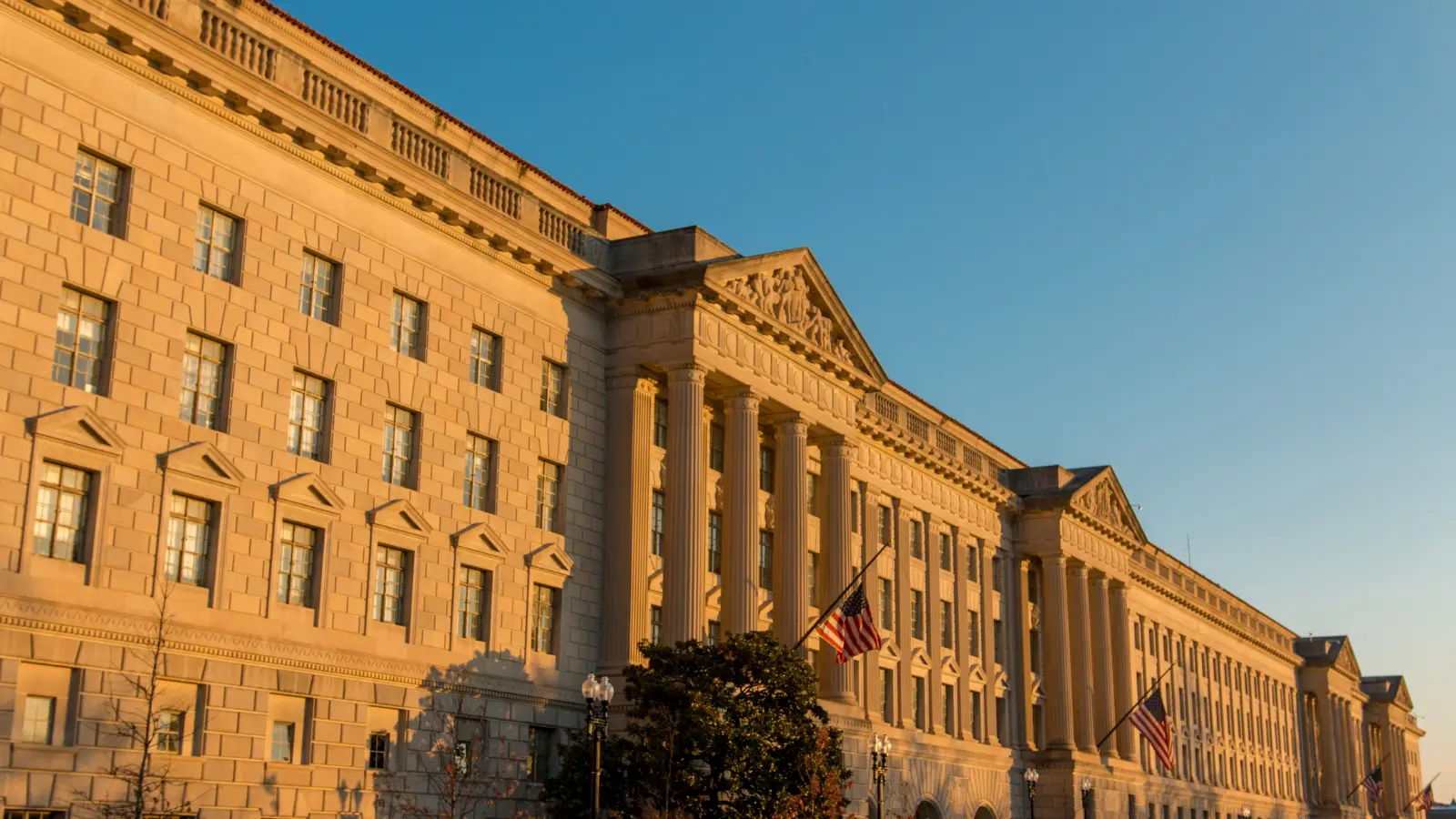
The federal government has an estimated $370 billion in deferred maintenance and repairs across Department of Defense and civilian agency buildings and related assets. That’s more than double the $171 billion reported in 2017, according to the U.S. Government Accountability Office (GAO).
It’s a striking figure, especially when so much of the conversation around infrastructure investment focuses on what the government plans to build next.
New facilities and major construction projects represent visible progress, but the government is also responsible for maintaining an enormous portfolio of existing infrastructure. As that infrastructure ages, the cost of preserving it is becoming an increasingly significant financial obligation.
The challenge isn’t simply finding enough money to complete outstanding repairs. It’s determining which facilities remain worth investing in, how long they can continue serving their intended purpose, and whether the government has the information needed to make those decisions effectively.
When Delaying Repairs Becomes More Expensive
Federal agencies operate within budgets that must account for immediate operational needs as well as long-term infrastructure responsibilities. When funding is limited, maintenance projects that don’t appear urgent can be pushed into future budget cycles, particularly when a facility remains functional despite its age or condition.
The difficulty is that a facility’s ability to remain operational doesn’t necessarily reflect the condition of the systems supporting it. A building may continue serving its purpose while underlying problems gradually become more expensive to address.
Consider an aging roof that needs repairs. If the building remains usable, postponing the work may seem reasonable in the short term. But continued deterioration can eventually allow water intrusion, damaging other building systems and turning a relatively contained repair into a much larger rehabilitation project.
When this pattern occurs across thousands of federal properties, the cumulative financial impact becomes substantial.
The GAO has identified funding constraints, rising construction costs, and aging facilities as contributing factors behind the growing maintenance backlog. In 2025, it also added building condition as a specific concern within its High-Risk List for federal real property management.
The issue has become significant enough to warrant attention beyond routine facilities management. Deferred maintenance can eventually affect an agency’s ability to carry out its mission, particularly when deteriorating infrastructure supports essential government operations.
A Problem That Extends Beyond Office Buildings
The scale of federal maintenance becomes easier to understand when considering the range of infrastructure the government is responsible for operating.
Federal property includes facilities that support essential government functions, along with infrastructure that provides public access to nationally significant resources. Each comes with maintenance needs that can directly influence an agency’s ability to fulfill its mission.
The National Park Service offers a particularly useful example. At the end of fiscal year 2025, the agency reported approximately $24 billion in deferred maintenance and repair needs across its infrastructure.
For an agency responsible for preserving public lands while accommodating millions of visitors, infrastructure condition has consequences that extend well beyond the cost of repairs. Deteriorating roads can limit access to certain areas, while aging utility systems can affect the facilities and services available to visitors.
These challenges illustrate why deferred maintenance cannot be evaluated solely by the amount of money required to complete outstanding work. Agencies must also consider how deteriorating infrastructure affects the services they are expected to provide.
And when available funding is insufficient to address every identified need, determining which projects deserve priority becomes an increasingly important responsibility.
The Difficult Decisions Behind Federal Infrastructure Spending
A growing maintenance backlog might suggest that the solution is simply to repair more facilities. In practice, the situation is more complicated because not every federal asset represents an equally valuable long-term investment.
Some buildings remain essential to agency operations and warrant continued investment to preserve their functionality. Others may no longer serve their original purpose or may require maintenance expenses that are difficult to justify relative to their continued usefulness.
The GAO has identified disposing of unneeded federal properties as one potential strategy for reducing the government’s maintenance burden. This reflects an important distinction between maintaining infrastructure because it already exists and investing in infrastructure because it continues to provide meaningful value.
But making those decisions requires reliable information about the assets themselves.
Federal agencies need to understand not only the condition of a facility, but also the cost of keeping it operational and whether it will continue meeting future needs. Without that information, it’s difficult to determine whether rehabilitation, replacement, or disposal represents the best use of public resources.
A major renovation may appear expensive when evaluated as a standalone project, but it could extend a facility’s useful life for decades. Conversely, continuing to fund repairs on an underutilized building may divert resources away from facilities that play a more important role in agency operations.
The $370 billion backlog is therefore an estimate of identified maintenance and repair needs, not necessarily a fixed amount that should be spent repairing every existing asset.
The more important question is how agencies use that information to establish priorities and make decisions that will hold up over time.
What This Means for Federal Contractors
These decisions have implications for the contractors responsible for delivering federal infrastructure improvements.
When an agency determines that an existing facility should be preserved rather than replaced, the resulting project may involve a very different set of technical requirements than new construction. The objective becomes extending the useful life of an asset while accounting for the limitations of the existing structure and the operations it supports.
That places greater importance on understanding facility conditions before work begins.
For example, upgrading mechanical systems in an occupied federal facility requires more than determining which equipment should be replaced. Contractors must also evaluate how the work can be completed without unnecessarily interrupting the operations that depend on those systems.
The challenge is not simply delivering an improvement, but doing so while preserving the facility’s ability to function.
For contractors evaluating federal opportunities, this creates a reason to look beyond the immediate construction scope. Understanding why an agency is investing in a particular asset, and what that investment is intended to accomplish, can help inform project planning and the technical expertise required.
It also reinforces the importance of accurate assessments and coordination early in the project lifecycle. When the purpose of an investment is to extend the value of an existing facility, decisions made before construction can have a significant influence on whether that objective is achieved.
Looking Beyond the Next Construction Project
The growing federal maintenance backlog highlights a larger issue in how infrastructure investments are evaluated.
New construction is often measured by the successful delivery of a completed facility, but the government’s financial responsibility for that asset continues long after the project is finished. Decisions made during design and construction can influence maintenance requirements and operating costs for decades.
That makes the long-term performance of infrastructure just as important as its initial delivery.
For existing facilities, the challenge is determining where continued investment can preserve that performance and where a different approach may better serve an agency’s needs.
At Certis Government Services, we recognize the importance of experienced technical professionals in supporting these decisions and the projects that follow. As agencies evaluate aging infrastructure and pursue facility improvements, specialized expertise can help translate long-term objectives into practical project solutions.
The federal government will continue to invest in new infrastructure, as it should. But the growing cost of maintaining existing assets demands a more deliberate approach to managing what is already in place.
With hundreds of billions of dollars in identified maintenance needs, the question is no longer just how much infrastructure the government can afford to build.
It’s which investments will allow the infrastructure it already owns to continue delivering value for years to come.