
Disaster funding creates opportunity.
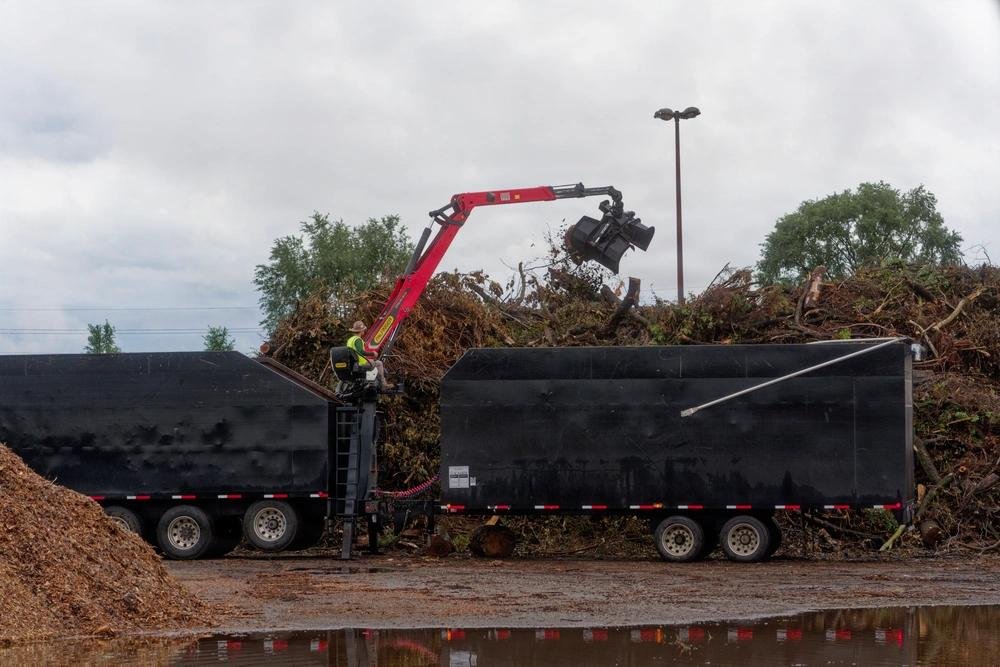
But funding alone does not clear debris, restore utilities, repair public infrastructure, or put qualified personnel in the field.
Execution does.
That distinction is becoming increasingly important as FEMA moves significant Fiscal Year 2026 preparedness, recovery, and resilience funding into state and local programs.
On September 23, FEMA announced more than $1.6 billion through its preparedness grant programs, including approximately $83 million for the Emergency Operations Center Grant Program. Days later, FEMA announced more than $781 million for 493 recovery and mitigation projects nationwide. Those projects include debris removal, emergency protective measures, public facility repairs, utility restoration, flood mitigation, backup power, and other infrastructure improvements. FEMA
For government agencies, prime contractors, and their delivery partners, the message is straightforward:
Readiness must exist before the requirement becomes urgent.
The organizations best positioned to execute these programs will be those that can mobilize qualified teams quickly while maintaining the financial controls, environmental compliance, safety oversight, technical reporting, and subcontractor accountability required for federally funded work.
Funding Is Moving From Planning Into Execution
FEMA’s Fiscal Year 2026 Emergency Operations Center Grant Program provides $82.96 million for the construction, upgrading, and equipping of designated emergency operations centers.
These facilities are intended to provide secure, sustainable, strategically located, and interoperable environments where multiple agencies and jurisdictions can coordinate during major emergencies. FEMA announced the program’s awards on September 23, 2026. FEMA
At the same time, FEMA’s late-September recovery announcements show how broad the downstream project requirements can become.
Recent awards have supported:
- Debris removal and emergency response
- Roads, bridges, culverts, and transmission systems
- Water, wastewater, and public utility infrastructure
- Emergency generators and backup power
- Flood-control and drainage improvements
- Public buildings and emergency facilities
- Wildfire suppression and recovery activities
- Hazard mitigation and property protection
For example, FEMA announced more than $116 million for 88 Florida projects, nearly $43 million for recovery and mitigation work in Alaska, Oregon, and Washington, and more than $141.6 million for projects across Arkansas, Louisiana, New Mexico, Oklahoma, and Texas. FEMA
Every award creates an execution requirement. Someone must assess the site, establish the scope, mobilize personnel, oversee construction, monitor environmental conditions, document progress, control costs, and provide the information necessary to support reimbursement and closeout.
That is where continuous readiness becomes an operational advantage.
Rapid Deployment Begins Before the Activation Notice
A rapid-response team cannot be built after a disaster has already occurred.
By that point, agencies and contractors may already be competing for the same equipment operators, field supervisors, engineers, environmental specialists, safety professionals, inspectors, and project managers.
True readiness requires much of the work to happen in advance.
Organizations should already understand:
- Which roles will be needed during the first days of an activation
- Which personnel are available and willing to deploy
- What licenses, certifications, training, and site credentials are required
- How travel, lodging, equipment, vehicles, and communications will be coordinated
- Which partners can provide additional capacity
- How field reporting will connect to project controls and financial systems
- Who has the authority to make decisions as conditions change
The objective is not necessarily to maintain a large permanent disaster workforce.
It is to maintain a qualified, scalable network that can move from planning to execution without spending the first several weeks recruiting, negotiating, onboarding, and building basic operating procedures.
Performance Tracking Now Follows the Funding
Rapid mobilization is only one part of successful disaster recovery.
Organizations must also demonstrate that federal funding is producing the intended outcome.
For the FY 2026 Emergency Operations Center Grant Program, FEMA will evaluate the percentage of funded projects that result in fully operational EOCs and the percentage that improve EOC services and capabilities. FEMA will use Performance Progress Reports and award monitoring to determine whether funds are being used for their intended purpose and whether projects are achieving the results described in their applications. Grants.gov
The reporting requirements continue throughout the period of performance.
Recipients must submit federal financial reports quarterly. They must also provide semiannual performance reports that include overall project status, expenditures, and any issues that could affect completion. FEMA states that future awards or cash payments may be withheld when financial reports are late, incomplete, inaccurate, or show inadequate progress. Grants.gov
This means reporting cannot be treated as an administrative exercise performed at the end of the project.
The information must originate in the field.
Daily reports, equipment logs, labor records, inspection results, photographs, environmental sampling data, safety documentation, schedules, change records, and subcontractor invoices all contribute to the larger performance record.
When field information is inconsistent or delayed, program-level reporting becomes less reliable. That can slow reimbursement, complicate audits, and make it more difficult to demonstrate that the project is delivering the intended public benefit.
Sub-Tier Compliance Is Part of Project Delivery
Disaster recovery programs often depend on multiple levels of contractors, consultants, laboratories, equipment providers, and specialty firms.
That structure creates flexibility, but it also creates risk.
Under the FY 2026 EOC requirements, pass-through entities must comply with federal subrecipient monitoring and management standards. FEMA can terminate an award when a recipient or subrecipient fails to comply with the award’s terms and conditions. Grants.gov
Recipients and subrecipients must also comply with applicable federal procurement standards when purchasing goods and services under a FEMA award. Projects involving new construction, building modifications, ground disturbance, or potential impacts to environmental or cultural resources may require FEMA Environmental Planning and Historic Preservation review before work begins or federal funds are released. Grants.gov
For prime contractors and agency partners, this makes subcontractor management an operational responsibility.
It requires clear flow-down requirements covering:
- Safety and quality expectations
- Labor and equipment documentation
- Environmental procedures
- Procurement requirements
- Record retention
- Cost and invoice support
- Performance reporting
- Data security
- Corrective-action procedures
A subcontractor may perform excellent technical work and still create program risk if its documentation cannot support the federal reporting, reimbursement, or closeout process.
The most effective time to address those requirements is before mobilization, not after the first reporting deadline.
Interoperability Extends Beyond the Emergency Operations Center
FEMA’s EOC program emphasizes facilities that are fully interoperable and capable of supporting coordination across agencies and jurisdictions.
That principle should extend into field operations.
An emergency operations center may receive information from inspectors, construction managers, environmental teams, GIS specialists, utility representatives, equipment operators, local officials, and multiple contractors.
The value of that information depends on whether it can be understood, verified, and combined into a common operating picture.
For field teams, that can require standardized approaches to:
- GIS coordinates and asset identification
- Damage classifications
- Inspection forms
- Photographic documentation
- Environmental sampling and chain of custody
- Work-completion quantities
- Equipment and personnel tracking
- Safety incidents
- Schedule updates
- Cost coding
- Document naming and retention
Technology helps, but interoperability is not only a software issue.
It is also a process issue.
Two teams using the same platform can still produce incompatible information when they use different terminology, location references, inspection standards, or reporting schedules.
Organizations preparing for FEMA-funded work should therefore establish common field procedures before teams deploy.
Disaster Recovery Requires Multi-Discipline Field Teams
Large recovery programs rarely fit within a single technical discipline.
A debris-removal operation may require heavy equipment supervision, traffic control, environmental monitoring, safety oversight, GIS documentation, quality assurance, logistics, and contract administration.
A temporary water-treatment project may require civil engineering, hydrology, environmental sampling, construction management, equipment coordination, permitting support, and field quality control.
Infrastructure restoration can require engineers to assess damage, construction teams to stabilize conditions, environmental professionals to evaluate potential hazards, and project controls personnel to document progress and costs.
These functions cannot operate as isolated workstreams.
They must work under a unified project-management structure with clear authority, consistent reporting, and a shared understanding of the mission.
This is especially important during the early stages of a response, when conditions change quickly and decisions must often be made with incomplete information.
Speed matters.
But coordinated speed matters more.
What Prime Contractors and Agencies Should Do Now
The current funding environment gives government agencies and contractors an opportunity to strengthen their operating model before the next major activation.
A practical readiness assessment should address four areas.
1. Confirm Deployment Capacity
Identify qualified personnel by role, geography, availability, certifications, and expected mobilization time. Validate the ability to scale beyond the initial team when additional locations or workstreams activate.
2. Establish Field Controls
Prepare safety plans, environmental procedures, quality requirements, daily reporting templates, escalation paths, equipment logs, and document-control standards before deployment.
3. Align Reporting Across Every Tier
Make sure prime contractors, subcontractors, consultants, and field personnel use compatible cost codes, project identifiers, progress measures, and documentation requirements.
4. Test the Mobilization Process
A contact list is not a deployment plan.
Organizations should test how personnel will be contacted, approved, onboarded, transported, equipped, assigned, supervised, and integrated into the reporting structure.
The most valuable readiness exercise is one that exposes gaps while there is still time to correct them.
How Certis Government Services Supports Mission Readiness
Certis Government Services supports federal, state, and local programs across emergency management and disaster recovery, construction, environmental services, and civil engineering.
CGS provides rapid-response and nationwide-mobilization capabilities, including debris removal, field teams, safety and logistics oversight, environmental monitoring, engineering support, project management, quality management, and contract administration.
That experience includes deploying more than 80 specialized professionals for the CalRecycle wildfire debris and tree-removal program in Northern California. CGS has also supported the design and construction of a temporary water-treatment system for the USACE Wilmington District following Hurricane Helene.
These projects demonstrate an important reality about disaster recovery:
The requirement is rarely just for personnel.
Agencies and prime contractors need teams that can mobilize quickly, operate safely, work across technical disciplines, adapt as the scope changes, and provide reliable documentation from the field through project closeout.
As FEMA funding moves into active projects, readiness will be measured by more than how quickly an organization arrives.
It will be measured by how effectively that organization performs once it gets there.
Certis Government Services helps government agencies and prime contractors build and deploy the qualified, compliant, mission-ready teams needed to execute complex disaster recovery and infrastructure programs across the United States. Contact CGS to discuss upcoming requirements, surge capacity, or rapid-response support.